Turning Other People's Old Jeans Into Art
The Gallery Dept story starts with a contradiction that should not work and absolutely does: taking cheap, second-hand denim and selling it back for the price of a designer suit. Founder Josué Thomas, an LA artist raised by artist parents, began buying up vintage Levi's and Carhartt workwear and reworking each piece by hand — distressing, repainting, splattering, cutting, and reconstructing — until a $20 thrift find became a one-of-one object closer to a canvas than a garment.
The genius is not in pretending the denim is new. It is in making the history visible. A Gallery Dept piece wears its raw edges, paint drips, and natural imperfections as the design, not as flaws to hide. Thomas has described the appeal as the high-low contrast: an iconic workwear shape, the kind you would see on a construction site, lifted into luxury without losing the grit that made it interesting in the first place.
"Taking something you might see on a construction worker and having someone wear it as luxury — the contrast is the point."
How a $20 Thrift Flip Becomes $1,000+
The numbers are the part that makes people do a double take. Gallery Dept denim starts around a few hundred dollars and climbs fast — the signature flared and carpenter cuts, like the LA Flare Carpenter, have retailed in the $1,000 to $1,200 range, with custom and heavily worked pieces pushing higher still. On the secondary market the grail cuts hold serious value, regularly reselling in the high hundreds.
What justifies it, in the brand's logic, is that almost nothing is mass-produced. Each pair is handled in small batches or individually by artisans in Los Angeles, built on repurposed or deadstock denim, then distressed and painted by hand so no two are truly identical. The pieces are priced more like artworks than wearables — and the market has, repeatedly, agreed. The scarcity is structural rather than manufactured: you cannot machine-stamp ten thousand hand-painted one-offs.
Sold Out, Cosigned, and Always Wanted
Gallery Dept built its demand the way the most durable LA brands do — through genuine cultural proximity rather than advertising. The label cultivated an intentionally obscure, insider facade that rewarded the people who already knew, and the cosigns followed naturally. Virgil Abloh was an early champion and mentor, photographed in the LA Flare and publicly praising Thomas as someone building a new path for designers from communities fashion had ignored.
From there the reach widened across music and sport: pieces turning up on LeBron James, Kendrick Lamar, Drake, and the broader LA rap scene — artists like OhGeesy who share the brand's hometown and aesthetic and have helped keep it name-checked and visible. The point, as with the best cosigns, is that they read as alignment rather than placement. The brand looks like the city it comes from, and the city's artists wear it because it is theirs.
The result is a demand curve that has stayed stubbornly high. Drops sell out, the hand-made supply stays tight, and the resale market fills the gap — exactly the conditions that turn a clothing label into a collectible one.
Beachy, Faded, and Endlessly Californian
If there is one through-line in how Gallery Dept is styled and shot, it is a sun-bleached, beachy California nostalgia — faded tie-dye, vintage band-tee energy, worn-in flares, and a 70s hippie-meets-workwear palette that looks like it has spent a decade in the back of a van near the Pacific. Thomas has talked about growing up around LA tie-dye and the year-round, nostalgic feel of it, and that warmth runs through the whole catalogue.
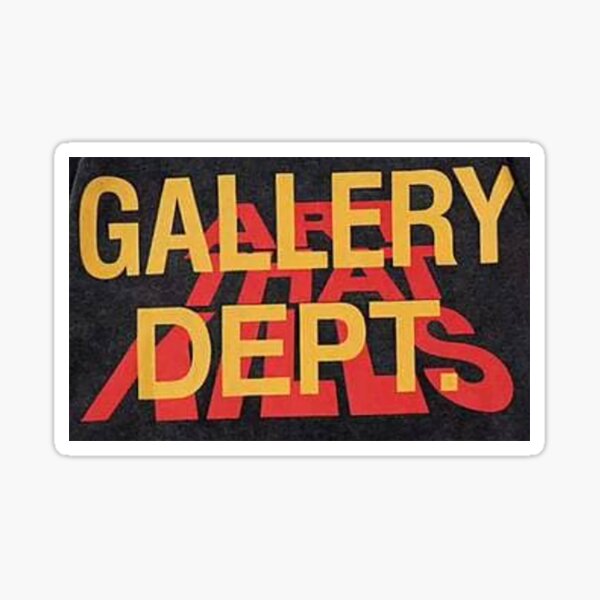
It is a deliberate counterweight to the harder edges of streetwear. Where a lot of hyped labels chase darkness or logo volume, Gallery Dept leans into something looser and more romantic: paint-splattered hoodies, the Art That Kills line, distressed flares, and accessories that all feel like they came out of the same sunlit studio. The styling sells the story — every lookbook reinforces the idea that these are lived-in artifacts, not factory output.
"Gallery Dept's pieces are priced like art because they are made like art — one pair, one set of hands, one history."
Why It Belongs in a Serious Archive
Gallery Dept is one of the clearest examples in modern fashion of value coming from process rather than material. The denim underneath is, by design, humble and second-hand. What you are paying for is the hand-work, the one-of-one finish, and the cultural weight the brand has accumulated through real cosigns and a coherent Californian point of view. For a collector, that combination — handmade scarcity plus durable demand — is exactly what tends to hold value.
If you are buying your first piece, the flares and carpenter cuts are the signature and the safest expression of what the brand does best. As with anything this sought-after, the resale market is full of fakes attempting to copy the paint and distressing, so handle and inspect before you commit. The pieces worth owning are the ones where you can feel the hand that made them.